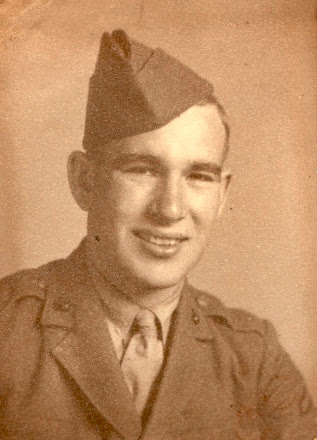
They called him the Black Sparrow, and from the beginning of his life, all he wanted to do was get to France.
He was born in Georgia, his father descended from Haitian slaves, his mother full-blooded Creek. He ran away while still a child, determined to fulfill his destiny. He lived for a time with a group of English Romani, learning the art of horsemanship and working as a jockey. He kept traveling and working until he made his way to Norfolk, where he stowed away on a ship bound for Scotland.
He wouldn't see America again for thirty years.
In Glasgow he got work as a lookout for gambling operators, saving money until he had enough to get to England: one country closer to his goal. In Liverpool he did hard labor until his muscles developed and he turned to boxing.
He became part of a whole expat community of Black boxers — some of the finest fighters in history — who had fled to Europe to find opportunities denied them in the States. Soon he was fighting regularly as a welterweight, racking up an impressive record, even fighting on the undercard of a few Jack Johnson bouts.
His boxing career earned him a decent amount of money, and eventually took him to Paris, where he won his bout and promptly hopped off the tour.
Imagine, if you will, being a young, handsome Black/Creek man, escaped from the American South, newly arrived in Paris in the springtime with your own apartment and a pocketful of money.
Fighting for France was a no-brainer. After all, in his heart at least, it was his country. He joined the French Foreign Legion, training to fight in the 3rd Marching Division alongside wealthy Ivy Leaguers, mariners, farmers, doctors, executives, refugees, cooks, and plenty of characters from all over the world running from undisclosed situations. These were Belgians, Italians, Russians, Greeks, Americans, a handful of Black Americans; Muslims, Catholics, Jews and Protestants — the legendary rabble of the Legion.
Sent directly to the front along the Somme, he was thrust into a world of filthy, bloody trenches still filled with the body parts of the dead and the rancid smell of shit and blood as his unit experienced some of the worst losses of the war.
At the end of this stint, what was left of the 3rd was disbanded and he had only the briefest respite before he joined the 170th Cavalry and was sent straight to Verdun to participate in what would become one of the worst battles in the history of the human race.
(The 170th were known to the Germans as "the black swallows," due to folkloric associations of the swallow with misfortune, and during his service he picked up another name, separate but similar from the Black Sparrow: "the Black Swallow of Death.")
Now a corporal, he led a machine-gun crew and again was front-and-center for the worst of the fighting, suffering first a shrapnel wound to the face that he simply fought through, then finally sidelined by a massive, nearly fatal wound to his thigh that finally sent him away from the front.
Decorated with the Croix de Guerre for his valor at Verdun — one of France’s highest military honors — he was well within his rights to find a desk job in the military.
He had other ideas. He wanted to fly.
Already viewed as a hero, he was able to pull the necessary strings to enter flight school, and became the first Black American fighter pilot in history.
He flew a SPAD VII C1 with a distinctive alteration to its appearance. Painted on the outside of the fuselage was a red heart with a dagger through it. Above the heart was his personal slogan, one he would later use for the title of his unpublished memoir: Tout Le Sang Qui Coule Est Rouge; roughly, in English: “All Blood Runs Red.”
He flew with honor and distinction until his career in the air came to an abrupt halt. The Americans had entered the war and the involvement of a certain Dr. Gros, a US Army Major with racist attitudes, led to the end of the Black Sparrow's career as a pilot.
But the French continued to celebrate him. He ended this part of his military career with the Military Medal, Croix de Guerre, Volunteer Combat Cross, Medal for Military Wounded (twice), World War I Medal, Victory Medal, Voluntary Enlistment Medal, Battle of Verdun Medal, Battle of Somme Medal, and the American Volunteer with the French Army Medal.
And that is when his life got interesting.
The Great War over, he found himself in Paris in the 1920s at the onset of the Jazz Age. He got back in shape, took work as a sparring partner and fought a few more times. But it wasn't sustainable with his injuries.
So he learned to play the drums and became a jazz musician. He gigged frequently, saved money, and ended up in a business partnership with a biracial American blues singer whose birth name was Ada Beatrice Queen Victoria Louis Virginia Smith — known as "Bricktop" for her red hair.
Together, they opened the Le Grand Duc, and thus he became proprietor of the hippest nightclub in the hippest city during the birth of hip.
He got married around this time to a Frenchwoman named Marcelle and they had two daughters. For reasons that remained private, Marcelle ended up leaving him with their children, to whom he would remain devoted for the rest of his life, as we will see.
But he had to balance the duties of being a single parent with Le Grand Duc — and later his other club, L’escradille, which was connected to a boxing gym so that patrons could party, then exercise, take a steam bath, get a massage, and start partying again.
To name the personages that frequented his clubs is basically to list the greatest names in art and culture in the renaissance that was the 1920s.
Langston Hughes was a busboy and dishwasher. Arthur Wilson — you may know him as "Sam" of Casablanca fame — was part of the house band. Charlie Chaplin was a favorite. Gloria Swanson. Fatty Arbuckle. The Prince of Wales. Staff would move tables when Fred and Adele Astaire came in to tear up the floor. Picasso would stop by, and Hemingway was there often enough that he wrote about it in "The Sun Also Rises." Josephine Baker could not be missed, and even babysat for the Sparrow. F. Scott Fitzgerald and Zelda were frequent, notorious guests. Cole Porter would come in; he adored the way Bricktop interpreted his songs. When Louis Armstrong encamped in Paris, he and the Sparrow became close.
But the good times couldn't last. In 1933, Hitler was appointed Chancellor of Germany. In France, the Deuxième Bureau was created as a counter-intelligence service and the Sparrow was recruited to work with the beautiful Alsatian spy, Cleopatre "Kitty" Terrier, whose father's murder by Germans in the disputed border region had instilled in her a lifelong hatred of German expansionism.
Kitty and the Sparrow worked as a team at the club. He would serve tables and play dumb, exploiting German prejudices that would never suspect he was fluent in German. She would flirt her way into privileged information. It was a highly successful (and probably romantic) pairing, but with rationing, blackouts, and other wartime austerity measures, keeping businesses running became harder and harder.
He tried. He procured a wagon and would visit markets at the end of the day for discounted goods, throw them in a stew at the club. Come evening he would feed everyone for free, plus a free glass of wine per person and a pack of cigarettes per table. He tried. But of course, things got worse.
He pulled his daughters out of their convent school to keep them close. Closed the club. Many were fleeing as the Nazis came storming through Belgium. He wouldn't run.
He continued to work with Kitty in the Resistance until 1940, when the Nazis marched down Champs-Élysées and through L'arc de Triomphe.
Tens of thousands fled the city only to be bombed from the skies. He left his daughters in the care of Kitty, who promised to do what was necessary to keep them safe, packed his gear, and headed for the frontlines, determined, despite his age and multiple injuries, to find his old unit and rejoin the Legion.
When he arrived, it was only to find that his unit had been destroyed. Returning to Paris, he couldn't enter; it had been completely overrun.
But he heard rumors that the French 51st was holding out at Orléans. He started off on foot. The roads were full of starved, half-mad refugees. Bombings were frequent.
When he got there he discovered that his lieutenant from the last war was the commander of the 51st, and, in what must have felt like the world's worst case of déjà vu, he was once again in charge of a machine-gun crew, fighting the Germans.
He fought with his usual bravery. But it was a hopeless last stand. A shell that killed 11 men threw him forty feet and cracked a vertebrae.
His fighting days were over. Using his rifle as a crutch, he struck out for a military hospital in Angoulême, trying to stay out of sight.
But there was little they could do for him there: painkillers, some bandages, and a few cans of sardines with a suggestion to head for Bordeaux and into Spain which, although Fascist, had maintained official neutrality, and was tacitly allowing Allied rescue efforts on Spanish soil.
He made it, somehow, received his first passport, and was put on a Navy ship to finally return to the United States he had fled decades before.
Life in Manhattan wasn't easy. He had to start from scratch. He worked odd jobs — longshoreman, salesman of French perfume. Through a contact in the State Department he was able to get in touch with Kitty, who was true to her word: his daughters were safe. They came to the States without a word of English between them and moved in with their beloved father in Spanish Harlem.
He became involved in Free French groups, working to support General de Gaulle, head of the Free French government in exile, and was also filmed getting beaten by police as part of a human chain to protect Paul Robeson when his concert was disrupted by white supremacists.
Times were tight but he was doing okay. His old friend Louis Armstrong came to help, hiring him as a tour manager and occasional drummer. He even tried to recover his club and gym in Paris, but the postwar situation was hopelessly complicated and he had to give up.
In 1959, via the French Embassy in New York City, he was made a chevalier (knight) of France. He said at the ceremony, "My services to France could never repay all I owe her.”
Working at the time as an elevator operator at 10 Rockefeller Plaza, he was wearing his medal on his work uniform when Dave Garroway, the host of The Tonight Show, asked him about it. Naturally amazed by what he heard, Garroway saw that this elegant elevator operator got the day off of work so he could come to his office for an interview.
It took a week to confirm facts. They all checked out: the elevator man at 10 Rockefeller Plaza was the first Black American fighter pilot in history — and a lot more.
He appeared on The Today Show, which led to a slew of other appearances and speaking engagements. At least in parts of America, he became a celebrated figure, his heroism recognized.
During his one return visit to Georgia, though, things were not so bright. His family has been scattered. One brother had been lynched by squatters when he'd tried to recover ancestral Creek land.
He never returned to the South, living out the rest of his life in New York City. But there was one final honor.
In 1960, General Charles de Gaulle, leader of Free France, came to visit Eisenhower. A million people greeted him in the streets when he arrived in New York. Hundreds of children sang "La Marseillaise." He gave speeches at City Hall and the Waldorf Astoria, then went where he truly belonged, to the Seventh Regiment Armory. Five thousand French were there.
And the Sparrow. His presence had been requested.
After de Gaulle's speech, he looked into the crowd as though searching for a friend. The thousands gathered, and assembled press, may have wondered what was going on as the general left the podium and headed into the sea of faces to find a lone Black man, his chest gleaming with medals.
The man stood at attention and saluted. De Gaulle returned the salute.
Then the general stuck out his hand and, when it was received, pulled the old soldier into a massive hug.
"All our country is in your debt," he said.
Crying, the man whose journey began as a stowaway, bound for an uncertain future, sure only that he belonged in France, could only respond, "Merci, mon general. Merci beaucoup."
Not long after, he entered the hospital with stomach pains. He'd been ignoring them, but the insistence of his daughters finally prevailed.
The cancer was advanced. He turned 66 on October 9, 1961, and died on the 12th.
The woman who had been helping him with his memoirs visited him on the day he died. She was crying at the bedside where he lay, seemingly lost to the world he was leaving. Hearing her sobs, his consciousness returned from wherever it had been.
He pulled the tube out of his mouth. He had something he wanted to say to her.
The old horseman, boxer, soldier, pilot, spy, club-owner, musician, and father turned to his friend and smiled.
"Don't fret, honey," he said. "It's easy."
His name was Eugene Bullard.
They called him the Black Sparrow.


 S
S