Watching Life in the Wild
A Nongame Watchable Wildlife Proposal
This is a slightly edited version of the proposal for a nature study project at our school that was approved for funding recently by the Georgia Department of Natural Resources. I thought some of my readers might be interested in seeing more specifics about the project I've written about several times.
Introduction
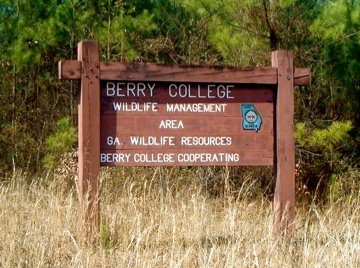
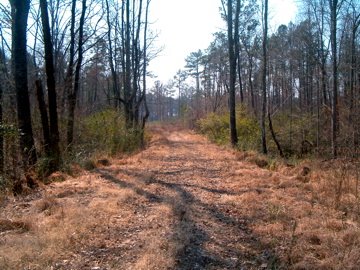
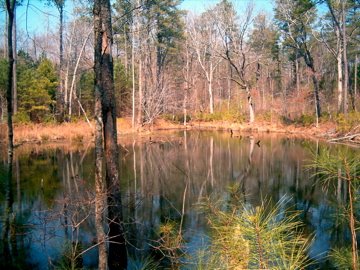
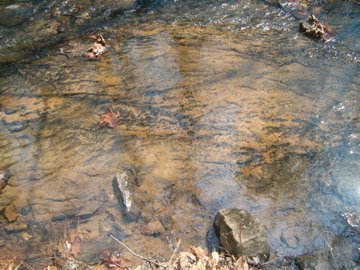
Armuchee Elementary School is uniquely situated to provide for using the environment as an integrating context for learning. Our campus adjoins the 20,000+ acre Berry College Wildlife Management Area (Berry WMA). Our school sits on the northern foot of Lavender Mountain, the tallest mountain in the county, and the home to one of the northernmost remnant stands of long leaf pine. Our mountain is a wrinkle in the earth’s crust in the Ridge and Valley province of Georgia between the Great Valley and the Cumberland Plateau. The abundant sea fossils to be found in the sandstone strata exposed along the hillside banks of our little stream attest to the ancient history of this area at the bottom of a shallow sea. The abundant macro invertebrates in the stream and lush flora on its banks suggest a biologically diverse environment. Our hillside woods are old growth hardwoods with a strip of large pines, with native azaleas, pink lady’s slippers and many other wildflowers. The bottomland woods are a more tangled habitat of pine, ironwood, beech, tulip poplar, dogwood, redbud, and many shrubs, ferns, and wildflowers such as hepatica, dwarf crested iris, and trilliums. Just upstream from our campus (a five to ten minute walk) is an abandoned railroad bed dating to the 1800s and a small pond that was constructed by the Civilian Conservation Corps (CCC) in the 1930s. Just across Scenic Road from our side entrance is another section of the Berry WMA and the larger Armuchee Creek. All of these elements of our campus and adjoining areas make it rich with opportunities to examine, discover, appreciate, and learn principles of zoology, botany, ecology, hydrology, and other sciences.
This abundance of wildlife provides an opportunity to reinforce the Georgia Performance Standards, not only in science, but also in reading, writing, language arts, and social studies. With modest funds, we can provide a place for our students, teachers, and community to watch a wide variety of Georgia flora and fauna, and in that context improve the skills of our students in all academic areas while they gain an appreciation for the biodiversity of Northwest Georgia.
The Plan: Stage One
Our proposal is to use Watchable Wildlife funds with other grants and donations to help our students, teachers, and community learn about the biodiversity of our campus and adjacent lands as they study, plan, and construct the first stages of a network of nature stations and trails. We expect that this process can be a continuing one of study, adjustment and growth by succeeding classes over a number of years. These are the steps that we envision for the first year of this project:
- Step 1: Establish with the help of consultants from the Department of Natural Resources, Berry College, the school system, and the community, 20 to 50 stations for wildlife observation throughout the campus, and others, if allowed, on adjacent property.
- Step 2: Make improvements necessary to access the sites. This will include building a pedestrian bridge over the stream and clearing fallen trees, detritus, and unwanted vegetation from proposed paths.
- Step 3: Conduct a year-long observation of the flora and fauna at each station, noting also the geology, hydrology, and man’s disturbance of each area. Each student will be assigned to help survey, photograph, and conduct a census of one station.
- Step 4: Develop a first draft of three guide booklets to the stations, one each to emphasize the Georgia Performance Standards for third, fourth, and fifth grades.
- Step 5: Present the completed first stage to the community during a public Watching Our Wildlife Day when students will explain the results of the year-long observations at each station.
The Plan: Subsequent Stages
We anticipate that this will be a continuing project. After the initial year of study the project will likely require further development. Funds for these improvements and extensions would be the subject of future proposals. For example:
• Refine and print updated guide booklets.
• Build boardwalks over sensitive areas to allow observation of sensitive flora and fauna or to access wetland areas.
• Build platforms to provide access to observe pond, creek, steep bluff, or wetland areas.
• Build steps to allow access up and down steep areas.
• Build additional outdoor classroom areas.
• Build a sheltered study area (or possibly move a donated historic cabin or barn to the campus as a study shelter.)
• Plan, study, and construct additional trails to the CCC pond and along the old railroad cut to Armuchee Creek.
• Construct boardwalks and platforms as required for aquatic studies at the pond and creek.
• Purchase additional lab or field equipment and supplies for studying specimens (more microscopes, water testing equipment, nets, guides, etc.)
Expected Results and Benefits
At the end of the first year of this project we expect our students, parents, and community to:
• have a beautiful trail providing access for observation of a biologically diverse ecosystem,
• have increased appreciation of the array of nongame wildlife in our area,
• have a greater awareness of the need for nongame wildlife conservation to protect the flora and fauna of our area, especially unusual species such as the long-leaf pine, pink lady’s slippers, and the amphibians and crustaceans in our watershed.
And, by participating in this project, we expect our students to have opportunities to improve their academic skills using the environment as a context for learning.
Other Support
Preliminary consultation on Stage One of the project has involved many individuals including persons from Georgia Department of Natural Resources, Arrowhead Environmental Education Center, Berry College, The Armuchee/Glenwood Foundation, Coosa River Nature Center, Coosa Valley Technical College, the Georgia Botanical Society, our own staff, and our Parent-Teacher Organization. The Parent-Teacher Organization has already set aside some funds for this project. The Glenwood/Armuchee Foundation and the local Ruritan Club have helped to fund previous environmental projects at our school. Since this project incorporates watching wildlife with educational goals we are also submitting the proposal for possible partial funding under the Nongame Wildlife Educational grants, as well.
Equipment/Materials/Resources Needed: Stage One
The project will require a number of pieces of equipment, supplies, resources, and
materials to complete successfully.
Step 1:
- meter sticks / rulers / other measuring devices
- 200 surveying flags for temporarily marking trails and study plots. 19.94
- 48 4” x 4” x 4’ treated bollards (cut at 45º on one end by school volunteer) for permanently marking stations
Step 2:
- Equipment for cleaning and clearing the trail (supplied by parents and volunteers)
- Materials for building a pedestrian bridge (5’ x 15’ - built by parent volunteers or the local vocational high school)
Step 3:
- 36 sets (12 for each grade level) of elementary identification guides:
- wildflowers
- ferns
- insects & spiders
- trees & shrubs
- Six teacher sets (two for each grade level) of similar but more complete guides, including other areas as well:
- wildflowers
- ferns
- stream macro invertebrates
- insects & spiders
- trees & shrubs
- geology
- fossils
- Six (two for each grade level) aquatic nets.
- Six (two for each grade level) insect nets.
- One LaMotte water quality testing kit.
- Three 3.2 MP (or better) digital cameras with 1 GB memory cards
- Three class sets of 10x hand lenses
- Three digital dissecting microscopes for examining specimens from the stream and forest
- Topographical map of the area. Geographic Information Services™ (GIS) aerial photos
- and private aerial photos (available through Berry College at no cost to school)
Step 4:
- The rough drafts can be printed by our school system printer.
Step 5:
- Printed programs, signage, and refreshments to be supplied by the school and volunteers