Showing posts with label Newbery Award. Show all posts

Sunday, December 23, 2007

My Newberys

I love children's literature. Recently I discovered the Newbery Project, a website for the review of books that have won the Newbery Award. That award is given to the most outstanding book of children's literature (in the opinion of the judges) published each year since 1922. I usually agree that the judges have chosen an outstanding book.


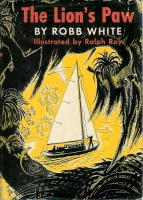
Of course some of the all time greatest children's books have missed out on the top prize. Charlotte's Web was honored but lost out to Secret of the Andes, not a bad book but no Charlotte's Web. As far as I know The Lion's Paw, my favorite children's book, was not even considered in 1946 - I doubt seriously that Lois Lenski's Strawberry Girl can match Penny (the heroine of The Lion's Paw) for loyalty, resourcefulness, and dogged pluck. Love That Dog missed out, as did The Teacher's Funeral and Bristle Face. And, of course, Frodo, Harry Potter, Lucy and Aslan, the BFG, Huck and Jim and Tom and Becky, Anne with an E, Jo and her sisters, Peter and Hook, and many other great characters of juvenile literature were created too soon, or in other lands, and therefore did not qualify for this modern American award.

Here is the complete list of Newbery Award winners from 1922 to 2007. I have high-lighted in green the 54 I remember reading. Several have been so long ago I remember little about them. For instance, I want to read A Wrinkle in Time and Summer of the Swans again soon, its been at least 25 years. I don't know why I never got around to last year's winner, Criss Cross. I have started and abandoned two kings: The High King and The Grey King - I'll get back to them some day. I have put links to posts I have written about some of the books.


2007: The Higher Power of Lucky by Susan Patron

2006: Criss Cross by Lynne Rae Perkins
2005: Kira-Kira by Cynthia Kadohata
2004: The Tale of Despereaux: Being the Story of a Mouse, a Princess, Some Soup, and a Spool of Thread by Kate DiCamillo
2003: Crispin: The Cross of Lead by Avi
2002: A Single Shard by Linda Sue Park
2001: A Year Down Yonder by Richard Peck
2000: Bud, Not Buddy by Christopher Paul Curtis
1999: Holes by Louis Sachar
1998: Out of the Dust by Karen Hesse
1997: The View from Saturday by E.L. Konigsburg
1996: The Midwife's Apprentice by Karen Cushman
1995: Walk Two Moons by Sharon Creech
1994: The Giver by Lois Lowry
1993: Missing May by Cynthia Rylant
1992: Shiloh by Phyllis Reynolds Naylor
1991: Maniac Magee by Jerry Spinelli
1990: Number the Stars by Lois Lowry
1989: Joyful Noise: Poems for Two Voices by Paul Fleischman
1988: Lincoln: A Photobiography by Russell Freedman
1987: The Whipping Boy by Sid Fleischman
1986: Sarah, Plain and Tall by Patricia MacLachlan
1985: The Hero and the Crown by Robin McKinley
1984: Dear Mr. Henshaw by Beverly Cleary
1983: Dicey's Song by Cynthia Voigt
1982: A Visit to William Blake's Inn: Poems for Innocent and Experienced Travelers by Nancy Willard
1981: Jacob Have I Loved by Katherine Paterson
1980: A Gathering of Days: A New England Girl's Journal, 1830-1832 by Joan W. Blos
1979: The Westing Game by Ellen Raskin
1978: Bridge to Terabithia by Katherine Paterson
1977: Roll of Thunder, Hear My Cry by Mildred D. Taylor
1976: The Grey King by Susan Cooper
1975: M. C. Higgins, the Great by Virginia Hamilton
1974: The Slave Dancer by Paula Fox
1973: Julie of the Wolves by Jean Craighead George
1972: Mrs. Frisby and the Rats of NIMH by Robert C. O'Brien
1971: Summer of the Swans by Betsy Byars
1970: Sounder by William H. Armstrong
1969: The High King by Lloyd Alexander
1968: From the Mixed-Up Files of Mrs. Basil E. Frankweiler by E.L. Konigsburg
1967: Up a Road Slowly by Irene Hunt
1966: I, Juan de Pareja by Elizabeth Borton de Trevino
1965: Shadow of a Bull by Maia Wojciechowska
1964: It's Like This, Cat by Emily Neville
1963: A Wrinkle in Time by Madeleine L'Engle
1962: The Bronze Bow by Elizabeth George Speare
1961: Island of the Blue Dolphins by Scott O'Dell
1960: Onion John by Joseph Krumgold
1959: The Witch of Blackbird Pond by Elizabeth George Speare
1958: Rifles for Watie by Harold Keith
1957: Miracles on Maple Hill by Virginia Sorensen
1956: Carry On, Mr. Bowditch by Jean Lee Latham
1955: The Wheel on the School by Meindert DeJong
1954: ...And Now Miguel by Joseph Krumgold
1953: Secret of the Andes by Ann Nolan Clark
1952: Ginger Pye by Eleanor Estes
1951: Amos Fortune, Free Man by Elizabeth Yates
1950: The Door in the Wall by Marguerite de Angeli
1949: King of the Wind by Marguerite Henry
1948: The Twenty-One Balloons by William Pène du Bois
1947: Miss Hickory by Carolyn Sherwin Bailey
1946: Strawberry Girl by Lois Lenski
1945: Rabbit Hill by Robert Lawson
1944: Johnny Tremain by Esther Forbes
1943: Adam of the Road by Elizabeth Janet Gray
1942: The Matchlock Gun by Walter Edmonds
1941: Call It Courage by Armstrong Sperry
1940: Daniel Boone by James Daugherty
1939: Thimble Summer by Elizabeth Enright
1938: The White Stag by Kate Seredy
1937: Roller Skates by Ruth Sawyer
1936: Caddie Woodlawn by Carol Ryrie Brink
1935: Dobry by Monica Shannon
1934: Invincible Louisa: The Story of the Author of Little Women by Cornelia Meigs
1933: Young Fu of the Upper Yangtze by Elizabeth Lewis
1932: Waterless Mountain by Laura Adams Armer
1931: The Cat Who Went to Heaven by Elizabeth Coatsworth
1930: Hitty, Her First Hundred Years by Rachel Field
1929: The Trumpeter of Krakow by Eric P. Kelly
1928: Gay Neck, the Story of a Pigeon by Dhan Gopal Mukerji
1927: Smoky, the Cowhorse by Will James
1926: Shen of the Sea by Arthur Bowie Chrisman
1925: Tales from Silver Lands by Charles Finger
1924: The Dark Frigate by Charles Hawes
1923: The Voyages of Doctor Dolittle by Hugh Lofting
1922: The Story of Mankind by Hendrik Willem van Loon

Friday, November 23, 2007

M.C. Higgins, the Great

Cross-posted at The Newbery Project

At first I was irritated. Virginia Hamilton began on page two throwing in M.C.'s thoughts - first person without quotation marks, here and there, no warning. I found it confusing. And irritating.

I was irritated by the violent nighttime encounter with the girl. I had a hard time forgiving M.C. for his incredible stupidity. I am son of a mother, father of daughters, and brother of sisters.

Where did Hamilton get the crazy idea of the pole? And pulling up the grave stones. And treating a hoop snake as real.

I am also, however, a former fifteen-year-old boy.

Eventually the disjointedness began to fit with the disjointed feelings plaguing M.C. He loves his maddening father. He aches for the girl. He is mesmerized by his wise and beautiful mother. He's torn by competing emotions of loyalty and anger and despair and longing and prejudice and superstition and love and hope.

He is fifteen.

Once again I bow to the wisdom of the Newbery judges. I think I know Jones and Banina and Ben and M.C. And the girl. Yes, I know the girl. These characters will stick.

M.C. Higgins, the Great by Virginia Hamilton is unique* in having won the Newbery Award, The National Book Award, and the Boston Globe-Horn Book Award. Hamilton is the first African-American writer to have won the Newbery. It is the 52nd Newbery Award book that I have read. I recommend it.

* Update: I am wrong. This book held that triple distinction until Holes by Louis Sacher matched it.

Thursday, November 22, 2007

Young Fu of the Upper Yangtze

Cross-posted at The Newbery Project

A glance had shown a formality of language that did not bode well. Elizabeth Foreman Lewis's Young Fu of the Upper Yangtze would be the oldest of the Newbery Award books that I have read. I wondered if it weren't very dated, a World War and a Communist revolution having intervened, not to mention Korea, the Cold War, Vietnam, and wild Chinese economic growth.

I bought this discard from the Sara Hightower Library annual used book sale. I often buy Newberry books for my classroom library when I find them at the sale. This one was in great shape. It was a part of the Bookmobile collection. The Bookmobile, which I drove as part of a summer job about 22 years ago, has been gone now for several years. There are 15 stamps on the date slip in the back of the book. They begin with FEB 5 1977 and end with APR 26 1988. So I am, at the least, the 16th person who has intended to read this particular volume. My intentions date back a year or more. Always some other book seemed more inviting.

But two days ago I picked it up again.

The formality turns out to be part of the charm of this story of a formal society at a huge crossroads of history. Nationalist and communist forces are on the move as various warlords alternately ruled the Chungking area. The walled city of Chungking sees its wall breeched by a wide road and horseless busses. A blonde westerner is running a hospital outside the gates. Civil war has forced a third of the population into banditry. Old ways are giving way to new. In the midst of this chaos Young Fu and his recently widowed mother move into the big city from the farm.

The book is, on one level, an adventure that pits the young protagonist against poverty, crime, natural and man-made disaster, war, political unrest, communism, murder, drugs, and gambling. He is nearly killed by ruthless soldiers. He barely escapes a raging fire and a sudden giant flood. He foolishly falls among vicious beggars, thieves, and cheats and manages to survive all these challenges.

More importantly it is the story of Young Fu's growth, physically, intellectually, emotionally, and ethically, during the next five years. He is befriended by an old teacher in the apartment upstairs, by a fellow apprentice in the coppersmith's shop, by the blonde westerner, and, especially, by his wise and benevolent master, Tang. During his adventures and trials he is sorely tempted to capitulate to superstition, to desert his friends, to compromise his standards, and to prevaricate to his loved ones. All the same temptations that you and I face, less dramatically perhaps but just as surely, in our lives.

In the end, integrity, courage, intelligence, loyalty, and rationality win out. What could be more relevant to the current generation of late-elementary and middle schoolers. As I read I found myself regretting the times I have fallen short of those qualities and renewing my determination to do better. The tough wisdom and sacrificial loyalty of these characters sometimes even moved me to the point of a tightness in the throat or moist eyes.

I think the Newbery judges of 1933 made a good decision.

Wisdom from Young Fu of the Upper Yangtze

A scholar is a treasure under any rooftree.

One must first scale the mountain in order to view the plain.

He who rides on a tiger cannot dismount.

No task into which a man puts his heart is too bad.

The superior man finds pleasure in doing what is uncongenial.

If a man's affairs are to prosper, it is simply a matter of purpose.

It is better to remain ignorant than to know what is incorrect.

Knowest thou not that the treasure of knowledge is to be revered for itself alone? It has been given that men might learn how to live, not to win fortune. What is fortune without wisdom?

Monday, November 12, 2007

Newbery Challenge: The Twenty-one Balloons

The Twenty-One Balloons
by William Pène du Bois


(Cross-posted at The Newbery Project.)

This is a goofy book. A crazy schoolteacher endeavors to escape the unpleasantness of teaching mathematics to unappreciative scholars by taking a leisurely and solitary journey aboard a very unusual hot air balloon. A few weeks later he is found famished and floating in the Atlantic having - after a subsequent trainride across America - circumnavigated the earth.

The bulk of the book is the professor’s fantastic recounting of his accidental encounter and adventures with the fabulously rich and secretive colonists of the famous volcanic island, Krakatoa. Du Bois himself produced the lovely drawings that illustrate the wondrous apparatuses of this author’s imagination.

Du Bois is wonderfully inventive. His book is not the sort I would usually seek out. I want characters to love - Anne with an E; Jim sacrificing his freedom for a friend; Penny, Nick, and Ben risking life and limb for the dream of a father*; a terrific, if naive, pig’s loyalty to his brilliant spider friend. Twenty-one Balloons is not really character driven. The professor is the only character we come to know well. Krakatoa is peopled aphabetically, for heaven’s sake, and we don’t get to know any of them well. But this outlandish story is beautifully crafted and raises interesting issues, such as the meaning of wealth. It is no wonder the 1948 Newbery judges were taken by this little book. I enjoyed it.

I found my very readable paperback copy for twenty-five cents at the Friends of the Library used book sale. It is the fiftieth Newbery Award book that I have read. This is my first post for the Newbery Project.


*Penny, Nick, and Ben are from my favorite children’s book, The Lion’s Paw by Robb White, now out-of-print.

Friday, June 15, 2007

Unlucky Scrotum

I've enjoyed reading several books during our beach vacation here at St. George Island, Florida.

I finally got around to reading the notorious Newbery Award winning book of the year, The Higher Power of Lucky. As the whole world now knows, that little book mentions the scrotum of a dog on its first page. SHOCK! AWE! KABOOM! A dog is bitten by a snake... there!
Lucky Trimble crouched in a wedge of shade behind the Dumpster. Her ear near a hole in the paint-chipped wall of Hard Pan's Found Object Wind Chime Museum and Visitor Center, she listened as Short Sammy told the story of how he hit rock bottom. How he quit drinking and found his Higher Power. Short Sammy's story, of all the rock-bottom stories Lucky had heard at twelve-step anonymous meetings -- alcoholics, gamblers, smokers, and overeaters -- was still her favorite.

Sammy told of the day when he had drunk half a gallon of rum listening to Johnny Cash all morning in his parked '62 Cadillac, then fallen out of the car when he saw a rattlesnake on the passenger seat biting his dog, Roy, on the scrotum.

Give me a break! Children are confronted daily with seamy sex and vicious violence in nauseating "reality" shows, movies, the news, commercials,"family" sit-coms... Our society is soaked in the unseemly of all sortssssssssssssssss.

And somebody is all in a tizzy because an author uses the correct term for a reproductive organ of a dog in a kid's book!

I teach fourth grade science. I admit that I feel more apprehension than I show when a young student asks about a linked pair of insects: "Look at those dragonflies, Mr. Shaw, what are they doing?" But I try to handle it like an adult. (And it's easier now than it was in 1969 - the year I began teaching.) I try hard to be absolutely matter-of-fact when I reply, "They are mating. That's how they reproduce. You'll see lot's of those animals mating this time of year. The females will be laying their eggs soon. Their life cycle is a little different from the monarch butterflies we studied..."

I think Patron did a beautiful job of handling the topic with Lucky. Are there still parents and teachers of nine- and ten-year-olds in this sex-soaked society who pretend reproduction - even in animals - either doesn't exist, or is unmentionable?

The Higher Power of Lucky is a good little book. It is not on my list of must-reads, but I have no problem at all recommending it to a fourth-grader.


Lordy-mercy, that poor dog!