Showing posts with label insects. Show all posts

Friday, June 02, 2017

Gleaning Facebook: Bugs

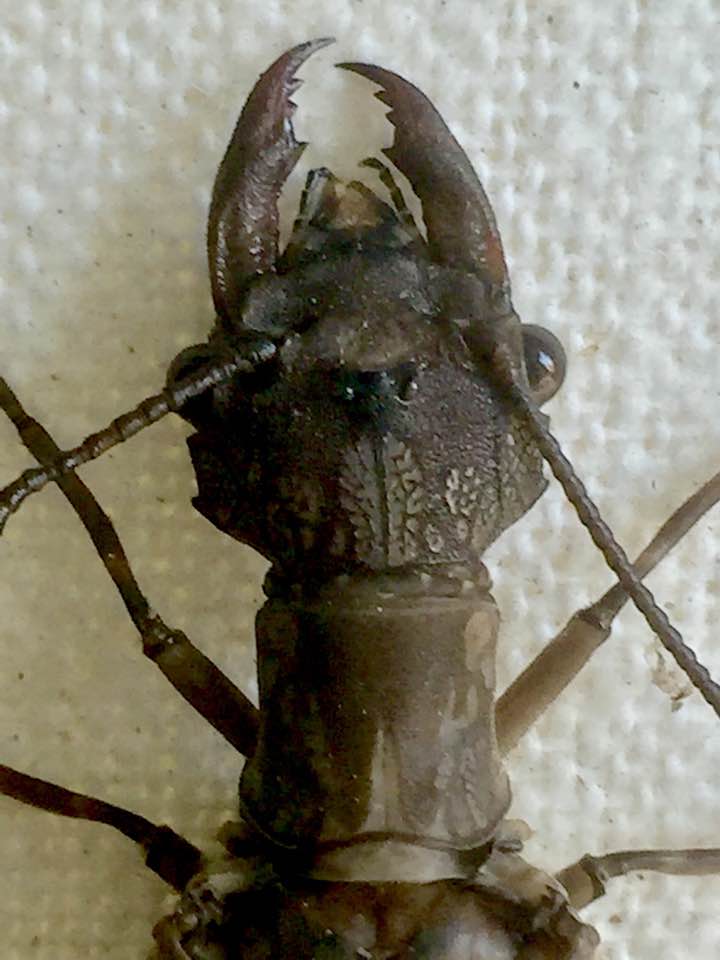
A visitor to our back porch this morning...

  Sandra Caruso

It does't look friendly !


He's just trying to make a living like the rest of us. pastedGraphic.png


CaroIine Atkins
CHECK OUT THOSE MANDIBLES


Sandra Caruso
What in the world is it ? Regardless, it would have met its demise on my back porch ! lol


CaroIine Atkins
No those mandibles would wreck you


Samantha Bishop
That's nightmare fuel.


Sharon Clark
Beautiful... what's it's name


David Matheny
"Termitus Gigantus" pastedGraphic.png


Sharon Clark
Actually, it looks like a female.Eastern Dobsonfly.

Terrell Shaw
Yes. Eastern Dobsonfly -- Corydalus cornutus. I have looked this one up before, but had forgotten its name. It spends most of its life as a nymph in streams. It lives only a few days as an adult. It's in the Megaloptera order... big wings.


Susan Polkinghorn
Cool!


Wayne Lewis
One of those Republicans. pastedGraphic.png


Terrell Shaw
IfvI thot that he would have been squshed! 

JK

pastedGraphic.png


David Matheny
It's a "Covfefe."


Terrell Shaw
Wish I'd thot of that! pastedGraphic_1.png


Trish Sullins Benefield
Ewwwwwwwwwwwwwwwwwww........................


Frank Norris
YUMMY!!!


David Matheny
Crunchy!


Terrell Shaw
Posted this above in a reply but...Eastern Dobsonfly -- Corydalus cornutus. I have looked this one up before, but had forgotten its name. It spends most of its life as a nymph (commonly called a hellgrammite -- thanks Joe Cook )in streams. It lives only a few days as an adult. It's in the Megaloptera order... big wings. (Thanks, Sharon Clark)


Sharon Clark
You're welcome...do you live near water. I read that in this stage of their lives that the Dobsonfly doesn't eat, it just reproduces


Terrell Shaw
Yes, the Oostanaula levee is in our backyard. (We are in Rome GA: where are you?)

Sharon Clark
outside of Raleigh NC


Joe Cook
Nymph stage is hellgrammite--incredible aquatic insect! And equally intimidating as a nymph!


Jacqui Rose-Tucker
That's very scary


Terrell Shaw
Naaahhh....  pastedGraphic_1.png


Nancy Johal Singh
Gross


Terrell Shaw
Nancy, I taught you better than that! 

pastedGraphic_1.png


Nancy Johal Singh
lol


Deborah Lake Dawson
That looks about as ancient and scary as one that we found on our deck. I will find picture!


Melanie Knauff
Keep posting stuff like this and I'll have to unfriend you! Yuck!


Michael Moody
Beautiful and awesome ! I love the REAL WORLD !


Mary Mc Donell
great for fishing

pastedGraphic_2.png


Anita Stewart
Didn't know what this creature was....thanks for the info.


Eric Stafford
Almost grabbed this when I was outside moving my trash can.
pastedGraphic_3.png


Terrell Shaw
That's a male Dobsonfly, I think. Bring him over to meet our female. Ha. Males only live sbout three days as adults and females about a week or a little more.


Eric Stafford
The one you had posted was the first one I've ever seen. So strange that I would see one in person the next day.


Donna Baxley
I love cool bugs!


Karen Walker McAlister Jordan
Ick


Brian Stevenson
Yikes Cuz!!!


--------------------------

From Deborah Lake Dawson:


"Yours looks more menacing but at the time I could not believe how this bug looked. You cannot see the pincher thing."


Comments

Terrell Shaw
an assassin bug - Reduviidae sp.


Deborah Lake Dawson
Yep, I looked it up. Is yours rare?


Terrell Shaw
There are a bunch of species.


Sunday, July 17, 2016

Gleaning Facebook: Dragonfly

Facebook friend and amazing dragonfly photographer, Marion Dobbs, has posted her BDF (Best Dragonfly Forever) photo from her trip to Utah to attend the annual Drangonfly Society of America shindig.

Who knew?
From Marion Dobbs Facebook:
My current BDF (Best Dragonfly Forever). This shot of the aptly named Bleached Skimmer (Libellula composita) was taken in Tooele County, Utah, at this year's annual DSA (Dragonfly Society of the Americas) meeting. We spend a day doing the society's business and listening to scientific paper presentations (This year's were excellent), but we flank that day with days in the field gathering data and having fun! The meeting is in a different location each year, so we always get the chance to see new species and scenes.

---------

Marion Dobbs There are other contenders for the title and may be still more after today. George Barton Wow!
pastedGraphic.png

Friday, May 15, 2009

Gleaning Facebook: AES Lifeforms

seven spot ladybug beetle, Coccinella septempunctata
An import from Europe.

ladybird beetle, Coccinella septempunctata


Dryocampa rubicunda - Rosy Maple Moth
My Charlotte brought this guy from home.


Dryocampa rubicunda - Rosy Maple Moth
Moths have antennae that look like feathers, usually. Butterflies have clubbed antennae.


When these buds open they will make one of the oddest, but most gorgeous little flowers you will see.


Turkey Tail Fungus, Trametes versicolor, I think. The same brackett fungus found all over the woods on rotting limbs and logs. See the pine cones? They help you understand the size of this big clump. It is more than a foot in diameter.


I'm 'sposed to know this, but I forget.

Carol Shaw Johnston
We have these flowers all over our woods. Let me know when you figure out what they are.


Monday, March 17, 2008

EEA 2008: Butterfly Conservation


I just looked back through my blog posts to find what I had written about last year's EEA (Environmental Education Alliance) Conference at Jekyll Island. My first EEA Conference was such a wonderful experience. I was surprised to realize that I had never gotten around to blogging about it! Oh, my!

Sheila and I just got back from the 2008 Conference held in Helen, Georgia at the beautiful Unicoi State Park and Lodge. Another great learning experience, even though almost all of the field trips were cancelled because of the famous Georgia storm of last weekend.

I participated in about a dozen sessions. These included three keynote addresses by dynamic speakers, and nine workshops. I have enough Great Outdoors blogging material to keep me going for weeks!

The first keynote was a presentation on butterfly conservation by Dr. David Wagner. Dr. Wagner is the National Book Award author of the Princeton Field Guide to Caterpillars of North America. He led a butterfly atlas project in Connecticut that has helped to document the threats to lepidopterans in the Northeast and come up with recommendations for how we can stem the decline in butterflies and moths.

His study established a tier system of threats that puts habitat loss at the peak and a lack of botanical succession as the second most important threat to butterflies and moths. Not only do these animals have to put up with a tremendous loss of habitat, but the habitat they now have is often "conserved" in a static state. Without the natural cycle of fire and then a succession of different sizes of plants, some Lepidopterans cannot survive.

The second tier of threats are important, though they do not reach the critical state of peril of tier one. These include invasive or introduced species that eat or crowd out host plants and nectar plants that butterflies and moths depend upon. An overabundance of deer and beaver are included in this group of threats. For instance, 26 Lepidopterans are threatened by the ash blight.

Other threats get a lot of attention, but are less important in the grand scheme of things. These minor threats against our scale-winged beauties include pesticides and, horrors!, insect collectors.


Dr. Wagner would like to see atlases of Lepidopterans developed in each state. He would like to enlist students, seniors, parents, homeschoolers, and anyone-else to help with these projects. That is why he is a supporter of the Discover Life Project.


Two miscellaneous notes:

Conservation = Management (not just preservation)

Children should be given the opportunity to explore the
"Serengeti of the Backyard."


More to come.

Saturday, March 01, 2008

Jonquils from our yard and bugs on Mama's house

As I gave the yard its first trim of the year in the late afternoon sun today I glanced to the west. The lovely backlit jonquils prompted me to cut the power and go for the camera:


While I was at it I took a few other pics of our assorted jonquils:


Earlier in the day I had given Mother's yard the once over. As we were talking in the yard Mother asked if knew what all those bugs were.


Sure enough, closer inspection of black clumps on the side of her house revealed big clusters of insects with the telltale x on their backs: true bugs, order Hemiptera.


I guessed milkweed bug.


I took lots of shots. Home again I checked Bug Guide. It looks like Eastern Boxelder Bug (Leptocoris trivittatus).


Sunday, September 09, 2007

Learning in the Great Outdoors - September 2007


School is off and running here in Armuchee, Georgia. The triple-digit heat wave has finally broken. It feels downright cool in the nineties and eighties. And our nature study project has officially kicked off with a Rivers Alive! clean-up of our woods, stream, and campus. So it's time for the Back-To-School Edition of Learning in the Great Outdoors, the Carnival of Environmental Education.

Welcome Back to School
...in the Great Outdoors!

The September 2007 edition of
Learning in the Great Outdoors
The Carnival of Environmental Education


Back to the Library
Homework
Find a tree for shade, an apple for a snack, and a good book...

Tricia of The Miss Rumphius Effect has a group of books on animal migration to recommend and even a group of poems on the topic, including this acrostic of her own:
Flapping, flying, flitting
L
epidopteras
U
nite! Blanketing vast landscapes
T
housands swoop and swarm
T
raveling southward
E
ngaged in the migration dance
R
eplaying the cycle of life
- Tricia Stohr-Hunt


Barb is Sketching in Nature at The Heart of Harmony. Well, she reviews the book, anyway. She says it is a "Great book for help with your nature journal"

Julie Dunlap wonders What's More Fun than a Free Book? at Pines Above Snow. She says, "What better way to start the new school year than contributing to a nonprofit organization that sends free books to need children? And strike a blow for environmental literacy by donating favorite "green" titles whenever you can."


Back to the Classroom

Stephanie decorates with Wild carrot blossums -- Queen Anne's Lace. Read about it at Stop the Ride!


Barb asks Do you Know Your State Insect? at The Heart of Harmony. This is a lesson on the

Your host invited a 95-year-old native of the school community to talk with his classes and learned a bit about the connection of people to the environment 85 years ago.

Silvia has posted Monarchs at Po Moyemu--In My Opinion. She has been busy raising Monarch caterpillars inside and includes some links to other resources.
Speaking of butterflies, Terrell at Aloneonalimb plans to participate with his students in a University of Georgia study of Monarch parasites this year. Check that out at the Monarch Butterfly Parasites Web Page.


Karen Bastille declares I Know That Tree! at At Home With Grandmother Wren.
Grandmother Wren suggests a hands-on lesson, introducing children to individual trees.

And there are the obligatory classroom reports on "What I Did this Summer" ---

By Sun and Candlelight has gotten back from the beach with some good shots of the shoreline habitat.

Cloudscome at Sandy Cove Trail has also been off to the shore.


Cool Virtual Outdoors Children's Website Award: Each time I host this carnival I try to hunt up a great kid friendly website related to the outdoors. I invite guest hosts to choose such an award as well. The only requirement is that the host think the site will be interesting to students. The first designee in July was EEK!

This month the award goes to a personal favorite. Frank and Victoria Logue and their little daughter, Griffin, were our neighbors for several years. Frank taught me what little I know about HTML. He and Victoria are wonderful writers with a number of books about the out of doors. Frank helped Griffin set up a web page about animals when she was only five. It has grown into an award winning little endeavor and now has one more award to its credit. Griffin is now a beautiful young woman. She probably doesn't put a lot of time into her Wild Animal Page these days. But it is an excellent example of what one talented little girl can do with the internet.


Back to the School Garden...
Christine Gowen presents DIY Bug Catchers, Nets and Boxes posted at The Crafty Teacher.
(Your host likes those clear, hard plastic, parmesan cheese containers for temporary bug barns. Put a little panty hose or mesh over the shaker holes and you're in business.)

Back to the Nature Trail...
Your host and his class had a bit of a Surprise on a Watershed Walk posted at Alone on a Limb. He also has enjoyed playing with the macro feature on a new camera and has captured some super close-ups in the outdoors recently.

So there's a little birdlet peeping for its Mom at the base of the hawthorn. What should you do? Mike Bergin presents Handling Birds: Yea or Nay? posted at 10,000 Birds, saying, "Is it OK to handle baby birds in need of help? Yes!"


Back on the Magic School Bus...
Speaking of birds, Hop aboard the Magic School bus and take a field trip with the Bird Study Ecology Group in Singapore. Tricia introduced us to it last month. It's a great resource for gorgeous nature pics.

Dana at Southern Gal Goes North gives a photo tour of Roaring Fork Nature Trail.

Jim at Decorabilia has posted pics of the Woodard Bay nature trail.

Check out the most recent updates on the River Ribble in the old country.

Back to the In-service Meetings...
Dana at Backyard Birding wonders Who Should Pay for Conservatiom Efforts? Perhaps this would be a good debate question for a middle or high school group.

Kevin Bedell suggests a simple step you can take toward living green Eat more locally grown food posted at 21st Century Citizen.

Nature Moms smell fall in the air and give lots of tips for greening the home, including your finances.

In the weird zoology department check out this story in the New York Times:
Most spiders are solitary creatures. So the discovery of a vast web crawling with millions of spiders that is spreading across several acres of a North Texas park is causing a stir among scientists, and park visitors. (read more)
-from the New York Times
Kevin Bedell presents Steve Loo is Changing the World posted at 21st Century Citizen.

Check out some of the other outdoors oriented Blog Carnivals:
Festival of the Trees
Oekologie
I and the Bird
Circus of the Spineless
Carnival of the Green

There's the bell. School's out. LIGO will be back here on the Limb in November. If you are interested in taking a turn at hosting Learning in the Great Outdoors please drop me a note at thelimb[at]mac[dot]com. In the meantime Julie Dunlap at Pines Above Snow will host the October edition. Julie would "love to be hiking through a pine forest right now" but she also finds time to do some excellent writing, mostly on environmental issues. Please support her with lots of submissions this month. Submit your blog article to the next edition of
Learning in the Great Outdoors
using our
carnival submission form.
Past posts and future hosts can be found on our
blog carnival index page
.


Technorati tags:

, .

(Monarch butterfly photos copyright 2005 by Terrell Shaw)

Sunday, September 02, 2007

Crazy as a Bessie Bug

Joan found my unkind insult of Joseph Smith (below) cute. She hadn't heard "bessie bug" in a while.

I am one who is spurred to action as easily as a disturbed bessie bug. Just mention a bit of trivia or an unusual term to me and, instead of clicking my wings against my belly audibly like a member of the Family Passalidae, I reflexively google whatever bit has teased my brain. So, for the curious visitors to the limb, here is a photo of a bessie bug - click it to see more:


Friday, August 17, 2007

MacroPhoto

Here are the results from a few experimental pictures taken with the macro feature of my new Canon S3IS. (Click on each pic to see the full size version.)

Logan, one of my fourth-graders, brought in his caterpillar he has raised from an egg at his house.


We got out the Princeton Field Guide to caterpillars and found this strange and beautiful fellow.


Logan mentioned that he had seen green ones as well on the same plant. I was interested to find that this guy's brothers and sisters can be very diverse in appearance.

Best we can figure, he will metamorphose into a Banded Sphinx (Eumorpha fasciata) moth.

Our campus includes several clumps of Maypops (as I called them in my youth) or more commonly, Passion Flower (Passiflora incarnata).


Here's the Passion Flower fruit.


Passion Flowers are the host plant for Gulf Fritillary (Agraulis vanillae) caterpillars.


Look at the proboscis on this little Skipper!


I'm gonna have fun with this camera!