Showing posts with label trees. Show all posts

Sunday, July 31, 2022

Hackberry Hell, Revisited

 After our Hackberry adventure of the wee hours of yesterday morning we welcomed our dear friend Mike Bock for a two day visit. Maloney's Tree Service had cleared the driveway, leaving the a huge pile of limbs and branches at the back of the house and the standing half of the tree at the front. The plan was to take down the rest of the tree on Monday and haul off everything then. 

Mike had been in Chattanooga for a great niece's wedding and arrived late so we stayed up late visiting. So when the unmistakable sound of a tree falling intruded on our consciousness, we were wide awake and went running out the front door. And there was clear sky that should be obstructed by tree and there was obstructed road that should be clear. The second half of our big ol' Hackberry was lying across Avenue A all tangled up with wires, yet somehow the the lights were still on up and down the street.

Soon the first responders were there to block off the street...

... and then the Georgia Power crew was hard at work straightening out the wires...
...and then the city's public works folks began to clear the street.

In the light of morning the road is clear...

...but definitely not the driveway.
We'll walk to church today.
This side of our old house will have a lot more sun.
By the time we walked back from church...

...Maloney's was hard a work again clearing the driveway.

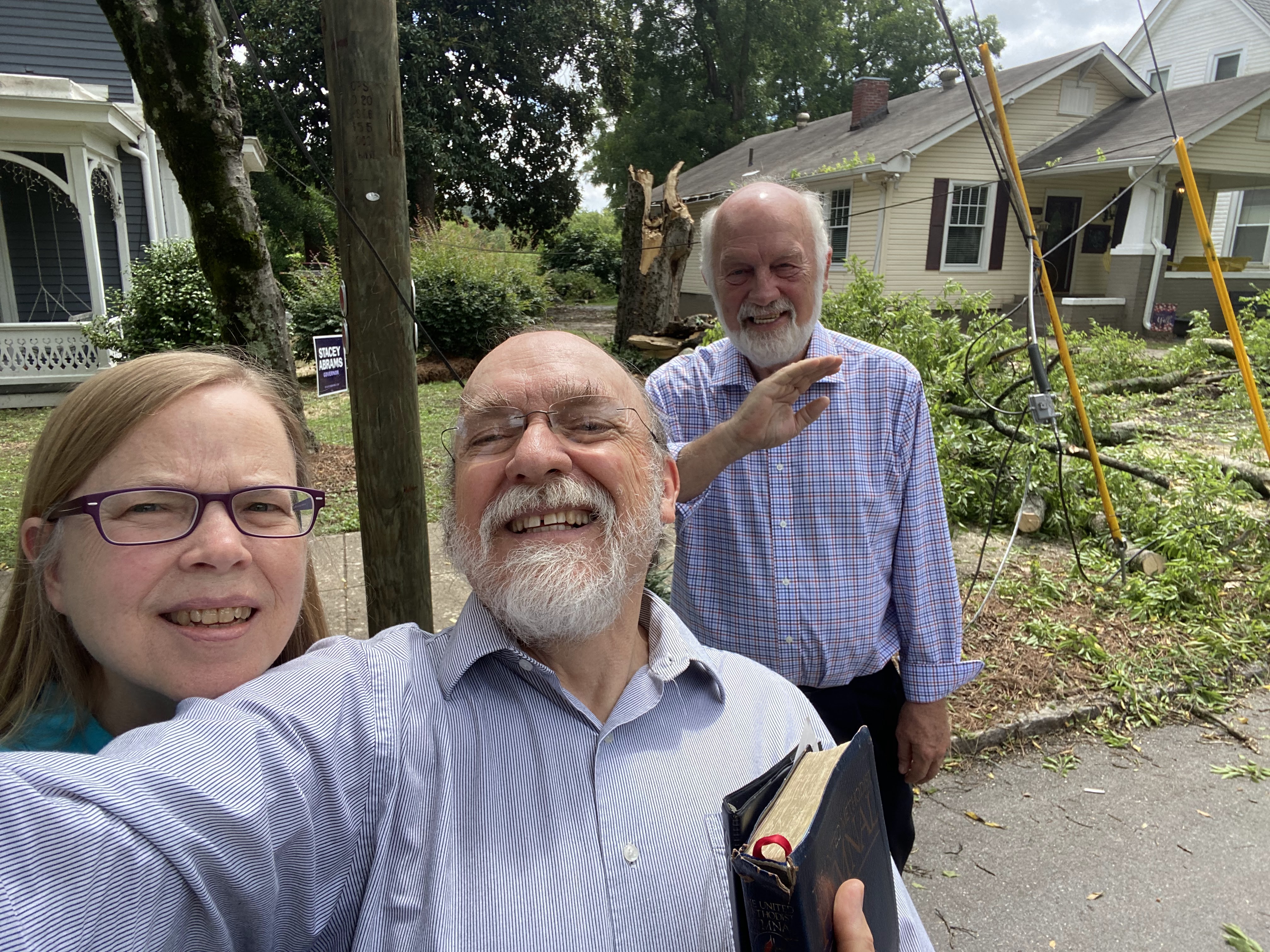
So we snapped a quick selfie.

That's the tree folks pulling away in the distance, but they'll be back tomorrow to haul away the last of the Hackberry.


Saturday, July 30, 2022

Hackberry Hell

Southern Hackberry trees are a pain. The preferred common name is probably "Sugarberry", but I think most folks around here call Celtis laevigata "Hackberry". The leaves are not particularly pretty in the fall. The lumber is not commercially valuable. It is used as firewood more than anything, but occasionally some of it ends up in cheap furniture. 

Worst, perhaps is its companion species. Wherever you find Hackberry trees around these parts you will  also find Asian wooly hackberry aphids (Shivaphis Celti). Those creepy little aphids first invaded the US in 1996. Nowadays they have colonized most of the southeast as well as California. Their special talent is exuding something called "honeydew". Right? Well, sooty fungus really likes "honeydew". So every plant, porch railing, piece of yard furniture, cars, roofs, etc. under hackberries is coated with yucky black goo in the fall. Ugh! My friend Dr. Vincent Mendes has suggested I order lots of ladybugs early in the fall to release beneath the Hackberry trees in hopes they will feast of the aphids and thus reduce the "honeydew" yield. I may give it a try this year.

On the positive side "Sugarberry" is drought tolerant and a decent shade tree in urban areas. And its root system helps to stabilize riverbanks and hill sides to reduce erosion. They even say plant hobbyists can use it in bonsai. Of course the prolific dark purple ripe berries are loved by lots of birds whose digestive processes help condition the seed to sprout once the bird, ahem, distributes them about. And the berries are edible for humans. Native Americans have used them in many recipes for food and in medicines to produce abortions, regulate periods, and treat venereal disease.

One other thing: some say Hackberry trees are prone to weak branching and thus breaking limbs.

We had three "Southern Hackberries" (Sugarberries) in our yard -- till about 1:30 this morning. During that storm last night lightning or wind or some combination took down about half of our largest Sugarberry right outside the second floor bedroom where we were sleeping. Maloney's Tree Service will take down the rest next week.

We hear strange noises in our old house often. I guess last night we passed it off as that Whippet automobile salesman we suspect haunts our hallways in the night. I went right on back to sleep. I woke again at five or so and noticed some noise and lights outside. Rising I discovered our power was out, and peeping out the front balcony door saw power trucks and workers busily repairing power lines. Good they are on it. Back to bed. We did not know about the downed tree till the owners of the house next door called to let us know about nine that our tree was filling our shared driveway!

Our scofflaw Sugarberry tree paid no attention whatever to my clear signage.

We were sleeping soundly with our noggins right at that upstairs window closest to the tree.

As you see there was no getting through our driveway till the tree surgeons could do their work.

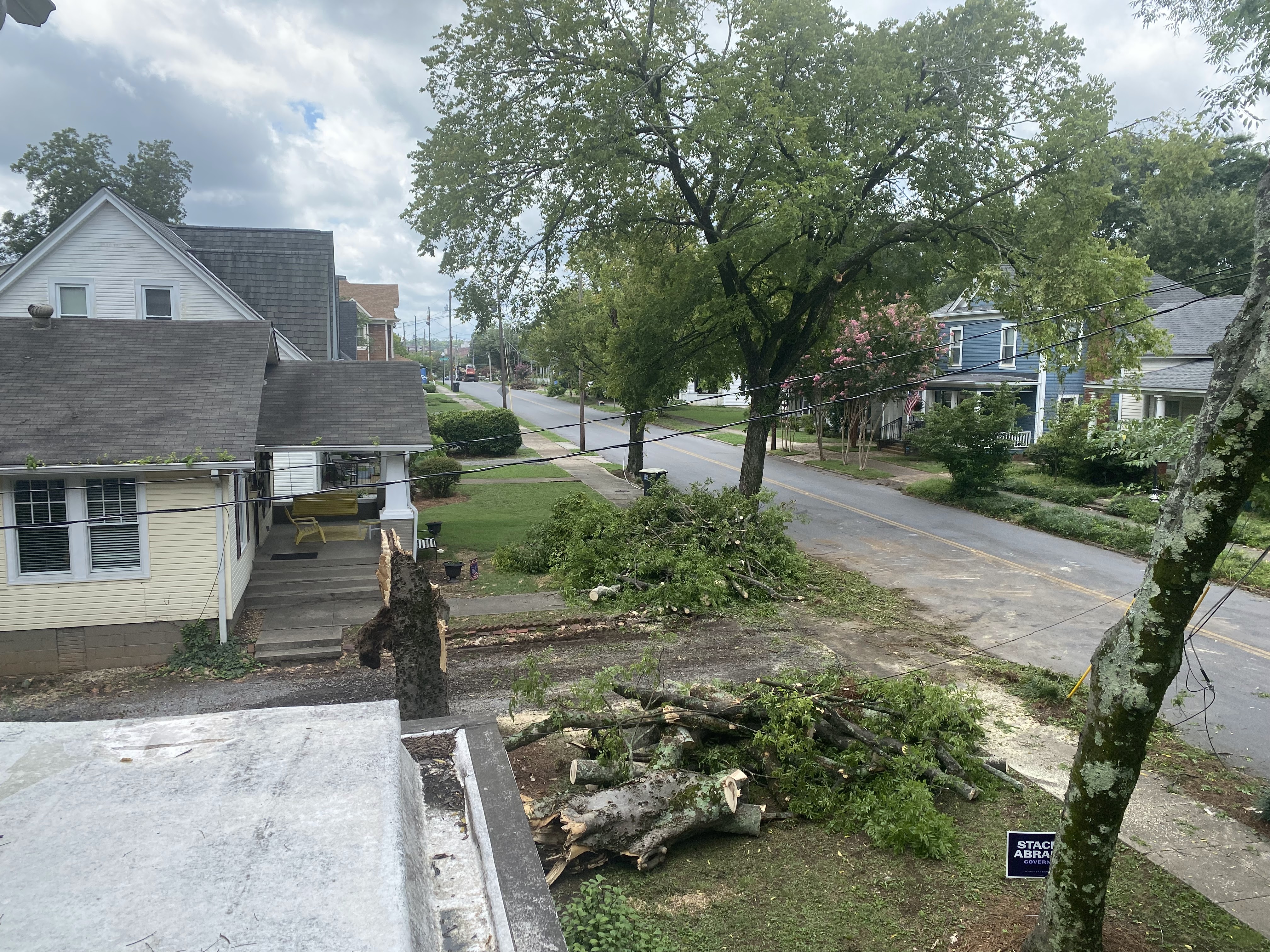
The view from our front porch. 

About half the tree fell pulling a foot or more of the trunk out of the ground on that side.

From our side yard the B&B was almost obscured.

This is the view from our bed.

The damage, thank goodness, was limited to the gutter and power entrance cable to the house next door. 

The Sugarberry took one large limb of the old Magnolia. 
That magnolia is in a photo of our house from 1918.


Maloney's Tree Service was on the scene in about an hour to begin the cleanup.

Georgia Power restored service to the B&B next door by mid-afternoon.

So we are out a bunch of money for tree service, plus, the electrical surges fried our Keurig machine, so we had no coffee for a while this morning! I had to walk all the way over to Dunkin on Shorter Avenue to remedy that intolerable situation.

Saturday, July 16, 2022

Oldest Tree East of the Rockies!

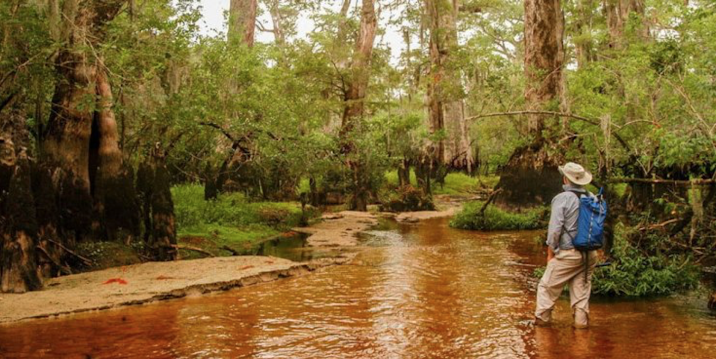
How did I miss this story from 2019? There is a tree in North Carolina that was hundreds of years old at the time of Christ. I tiny core has been drilled from it that records the floods and droughts of recorded history perfectly and so gives scientists a mighty trustworthy record of rainfall for the last two millennia. Click the picture to read the story from Newsweek.


Wednesday, June 26, 2019

Gleaning Facebook: Champion Tree


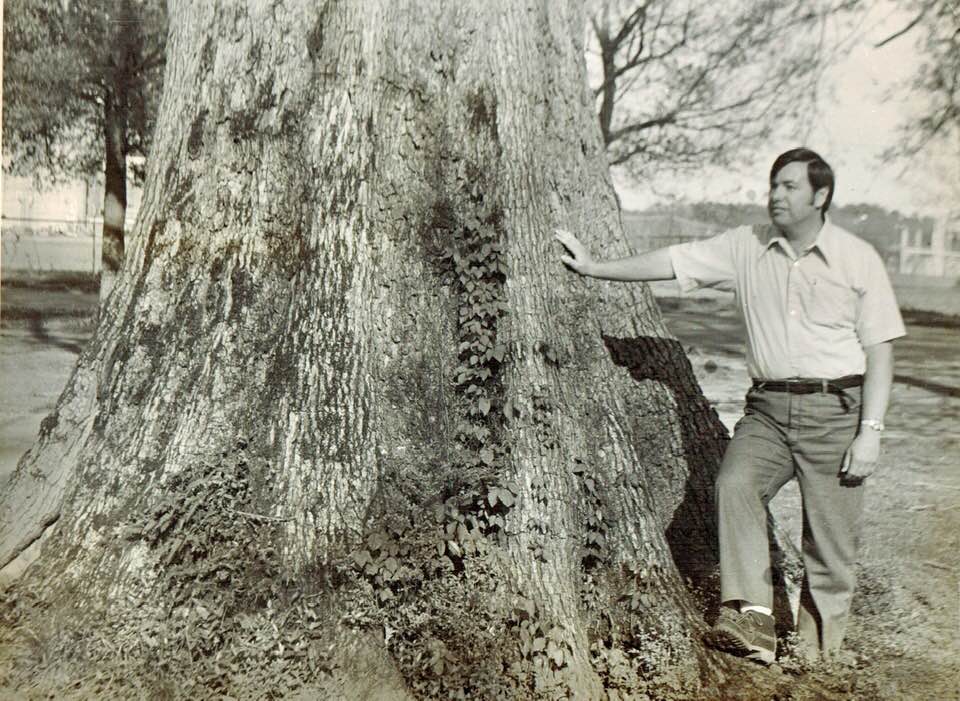
Back in the dark ages we ran a story about my friend Richard T. Ware in our newspaper, Broadside. I ran across these pictures today. Here Richard stands beside one of the ‘state champion’ trees he discovered. This is a White Oak at Chieftains Museum. (Corrected)

Comments

Ellen Henderson Garrard I always enjoyed Broadside!

Ellen Henderson Garrard We had just returned to Rome from Athens and were fans of Jody ...(?) from the Red and Black.


Mary Nisbet Asbury That was a big, beautiful tree

Richard T. Ware Terrell Shaw These photos are of the giant White Oak that stood in the front of Chieftain's Museum. You can see the mill in the background.

Terrell Shaw Aha! I thought it was the tree at Berry.

Terrell Shaw I had forgotten about that tree. I have pictures somewhere of a group of my fourth graders at the Chieftains tree. What happened to it?

Richard T. Ware I know it had a huge patch of concrete that was filling a hole where the tree was hollow, but I don't recall if it blew down or died and was cut. Perhaps it happened when I was in the army.

Terrell Shaw Richard T. Ware you were already out of the army when this story ran in Broadside in ‘75 or ‘76!

Richard T. Ware Terrell Shaw, ok I had no idea when this was taken. So, I don't know what happened to the tree.

Terrell Shaw How many state champion trees have you found over the years?

George Barton Have you ever seen the hackberry tree behind the Methodist church in Cave Spring?

Richard T. Ware No, I have not. Is there a giant tree there?

George Barton Richard T. Ware huge, turn right at the traffic light, if you are coming from Rome, church is on right, tree is right rear to church.

George Barton Newnan, Ga is full of beautiful trees, there is a huge willow oak at US 29 and Farmers Blvd.


Monday, November 30, 2015

Gleaning Facebook: Live Oak

Love those Live Oaks in Tallahassee draped in Spanish Moss. Melanie Collette Babb There is nothing grander than an old live oak tree. I have a framed photograph of the "Angel Oak Tree" located just outside of Charleston. It is said to be the largest living thing east of the Mississippi.
Larry Madden I arrived In Savannah just in time to start first grade. We lived in Savannah for ten years before moving back to Rome. I and my friends have climbed many of these trees from bottom to top and all the way out to the outer branches from side to side. We also showed the marshes and swamps no mercy, moving through them with caution, but not hesitating to go where ever we wanted.Great times make forever memories....

Michael Moody
Where are all it's cousins ?

Terrell Shaw
The Walmart/BassProShop/Costco developers saved this little island with its outstanding (literally and figuratively) tree. They did plant a few nursery oaks around the parking lots.

Friday, August 30, 2013

Gleaning Facebook: The Trouble Tree

A great story. Nerdy, I suppose, but I find rituals, like this fellow's, helpful in my life. I have specific rituals I have to follow before opening curtain during theatrical shows, before storytelling events, before singing performances, and before entering my classroom. I wish I'd read this in 1971 or 1983 and I'd have had a similar ritual for my daily homecomings. 

I did have a ritual saying for the girls whenever they left the house: "Remember who you are." Sometimes it was "Remember who, and whose, you are." It's sort of like the Jewish mezuzah, I suppose. A reminder to live up to what you believe.

Here are a few of my mantras for myself:
  • "You say this is what you most enjoy: have fun." (Before acting -- then a minute or so of imagining what my character is experiencing as the scene begins. Also before storytelling.)
  • "The words, the words, the words." (before singing -- borrowed from Rachel Jones)
  • "Look for stars" (entering the classroom)

  • and for several years now, "Keep the main thing, the main thing." (entering the classroom)

Do you have a private ritual? Share it in the comments.

The following was taken from a Facebook post by Russ Sites:

I hired a plumber to help me restore an old farmhouse, and after he had just finished a rough first day on the job: a flat tire made him lose an hour of work, his electric drill quit and his ancient one ton truck refused to start.

While I drove him home, he sat in stony silence. On arriving, he invited me in to meet his family. As we walked toward the front door, he paused briefly at a small tree, touching the tips of the branches with both hands.
When opening the door he underwent an amazing transformation.. His face was wreathed in smiles and he hugged his two small children and gave his wife a kiss.
Afterward he walked me to the car. We passed the tree and my curiosity got the better of me. I asked him about what I had seen him do earlier.
'Oh, that's my trouble tree,' he replied 'I know I can't help having troubles on the job, but one thing's for sure, those troubles don't belong in the house with my wife and the children.. So I just hang them up on the tree every night when I come home and ask God to take care of them. Then in the morning I pick them up again.' 'Funny thing is,' he smiled,' when I come out in the morning to pick 'em up, there aren't nearly as many as I remember hanging up the night before.
THIS ONE IS WORTH SENDING ON.
Life may not be the party we hoped for, but while we are here we might as well dance. We all need a Tree!

Wednesday, April 08, 2009

Gleaning Facebook: Loveliest of Trees


Loveliest of trees, the cherry now
Is hung with bloom along the bough,
And stands about the woodland ride 
Wearing white for Eastertide.

Now, of my threescore years and ten,
Twenty will not come again,
And take from seventy springs a score,
It only leaves me fifty more.

And since to look at things in bloom
Fifty springs are little room,
About the woodlands I will go 
To see the cherry hung with snow.

-A.E. Housman

Our native Black Cherry is a beautiful tree. I always enjoy watching it bloom. There are more showy trees. Its foreign and cultivated cousins are spectacular. Housman's poem makes a suitable anthem for nature lovers everywhere. The brevity of life and the glory of nature propel me often toward the woods.

Farmers are not lovers of cherry trees. The leaves of a cherry can make life briefer still for livestock -- they contain cyanide and can kill a hungry cow very quickly. 

Comment:

Tracy S. Lawler
I was first introduced to this stanza of the poem via the Baby Einstein videos that my kidlets have watched from birth...it was with a cherry tree in bloom photo, too! Beautiful.

Friday, March 20, 2009

The Pre-walk Walk

Audacious man that I am, I will lead a walk along the Armuchee Elementary School Nature Trail as part of the Spring Pilgrimage of the Georgia Botanical Society. This morning, in an effort to calm me, my friend Richard Ware accompanied me along the trail in preparation for the real thing on April 3. And as usual, when you are with Richard, you find something botanically interesting.

I will have three hours to show off the trail for the Botsoccers, so I wanted to know how ambitious I should try to be. This morning we started at the main entrance behind the school and headed upstream. Much of the hepatica is no longer blooming, but the streambanks are resplendant with Rue Anemone... ... And the leaf litter is decorated with thousands of little toothworts. We saw some Sweet Betsy (or toadstool trillium) getting ready to bloom. A few bluets. A Buttercup. Richard pointed out nice examples of White Oak, Southern Red Oak, Shagbark Hickory, American Beech, and other trees. He especially noticed a nice pairing of the smooth muscular bark of the American Hornbeam right next to the frayed stringy bark of the Eastern Hophornbeam.

We did not find two trees I've been hoping to find in our woods. Less than a mile down the road in a low area is the rare Nutmeg Hickory, and our mountain is known for its remnant forest of Yellow (longleaf) Pine. I'd love to find these two interesting trees at our school. No luck so far.

When we reached the end of our trail we decided to press on to the nearby old railroad bed and CCC Camp pond...

There Richard investigated the elms...... If they are native he thinks they are American Elms. But they may be imports planted there by the CCC I suppose.

We tramped around the edge of the pond to investigate the tiny stream that feeds it. I've meant to do that and was glad for the excuse. I followed Richard as he sought firm footing around the marshy margin of the pond. We heard rushing water and found a tiny (one foot by one foot) waterfall at one feeder stream. An old Red Maple in bloom leaned out...

...over the water plants that Richard wanted to investigate. He took a sample plant to identify.

Then we followed the crystal clear running water upstream. Watercress.
Lizard's Tail. Look at this rocky seep! With a manmade wall, brick enclosed...
...and ceramic pipe enclosed springs. And something interesting. Richard suspects it is Chelone glabra -- Turtlehead...
...it won't bloom till summer.

We will definely return to this spot as the spring and summer advance, to see what other wonders this special little habitat houses.

And maybe I'll offer my April 3 guests an extension of the planned walk.

Sunday, February 17, 2008

PTSW: Breathes There a Man...

Breathes There the Man...
from the Lay of the last Minstrel

by Sir Walter Scott


Canto Sixth

I

Breathes there the man, with soul so dead,
Who never to himself hath said,
"This is my own, my native land!"
Whose heart hath ne'er within him burned,
As home his footsteps he hath turned,
From wandering on a foreign strand!
If such there breathe, go, mark him well;
For him no Minstrel raptures swell;
High though his titles, proud his name,
Boundless his wealth as wish can claim;
Despite those titles, power, and pelf,
The wretch, concentred all in self,
Living, shall forfeit fair renown,
And, doubly dying, shall go down
To the vile dust, from whence he sprung,
Unwept, unhonoured, and unsung.

One of my regrets is that in sixty years of life in this blessed age of automobiles, trains, airplanes, interstate highways, and transcontinental rail lines, I have seen so little of "...my own, my native land."

In 1979 Sheila and I put up a map of the United States. On it we put red stars on locations where we had friends or relatives beloved enough that we would be welcomed for a night's lodging or more. We compared that map to the Amtrak route map. Amtrak had a promotion on their one-month "Rail Pass". Because of my school schedule that year, we had to schedule our trip to embark on the last day permitted by the promotion. But what a thirty-one days we spent touring this beautiful country by rail. We ended up imposing on only four families along the way - and one of those in absentia! What fun!

First from Brookwood station in Atlanta we boarded the Southern Crescent for the overnight run to the nation's capital. This may have been the least comfortable leg of the journey since the air-conditioning went out in our car. We crowded into another car for most of the trip, sleeping in our seats. We got to see a little of North Georgia in the twilight and then the bourgeoning housing developments of Northern Virginia in the dawn, but what a thrill to roll across the Potomac and see those gleaming monuments.

After a day or two in the capital city we boarded the Cardinal for a ride across the Appalachians through West Virginia to Cincinatti Ohio and a visit with our Kentucky friends, Bob and Sharlee and our Ohio buddy (and now contributor to the Limb) Mike Bock.

Then on to Chicago and a few days with my pregnant sister, Debi, and hubby Gregg. D&G, of course, made sure we saw all the Chicago sights.

The next leg was a long one up the Mississippi to the twin cities of Minnesota, then across the plains of North Dakota and Montana to Glacier Park. What a ride. The train was greatly delayed. 36 hours on the train! But it wasn't all bad. We met new friends. Played chess and Scrabble with complete strangers. And watched the plains slide by and the magnificent distant mountains approach.

Our first night at Glacier was spent at the Glacier Park Lodge. It was an old railroad lodge with a mammoth central lobby ringed by huge "whole tree" columns. In the morning we boarded one of the famous Glacier Park red convertible buses for the ride into the Canadian part of the park and the Prince of Wales Lodge. This grand chalet sits on the glacial moraine at the head of a beautiful lake. Our balcony overlooked the lake.

From there we took the red convertible into the heart of the park to the huge Many Glacier lodge. There the college age summer staff were all music majors and produced shows when they weren't bussing tables or making beds. We were there for their first week so the shows weren't ready, but I have never heard such beautiful renditions of "Happy Birthday" as we heard at each meal at Many Glacier Lodge. We hiked onto the retreating Grinnell Glacier. And along snow covered paths through gorgeous woods by raging glacier-fed creeks.

Soon we were back aboard the red convertible bus and climbing across the just-opened Going-to-the-Sun Highway cut through gigantic snowbanks over the continental divide at Logan Pass -- we got out to enjoy the snow and cold at the "top" --- and then descended into the warmth of the western side of the park and Lake Macdonald's smaller lodgings

There we hiked in shirt sleeves through the huge trees and great tree=strewn chasms.

From there we circled south of the park. We stopped to enjoy watching the mountain goats at a cliffside salt-lick.

Then back to the Glacier Park Lodge and a long hike through the blooming countryside there before reboarding the Empire Builder for the next leg of our journey.

From Glacier Park we passed through America's longest railroad tunnel in route to Seattle and a short stay at the station there before transferring to a different train for the ride along the coast to Portland. We could see the magnificent Mount Ranier from our coach.

At Portland we hunted down, not our friend Russ -- he was in Europe -- but his little convertible and its key and that to his Lincoln City beach house. We had wheels again! It was great to hole up in the little beach house, to walk along the beach in the June cold, and to motor up the coast in that snazzy little car. On one side of the road deserted sylvan scenes not unlike North Georgia except in scale; on the other the crashing waves of the anything-but-pacific Pacific.

The train ride from Portland climbs through the mountains hugging their sides precariously while displaying fantastic views for slack-jawed passengers.

At San Francisco's station our friends Steve and Laurie waited with baby Rachael and wonderful hospitality. We climbed through redwood forests with Rachael in a front pack. We visited Fisherman's Wharf. We ate chocolate sundaes at Ghiradelli's. We ate fresh salmon steaks. We grilled out at S&L's Oakland home. We watched the sea lions. We wondered at the marvelous Exploratorium. We hiked up the coast, playing in the tide pools, hanging over seaside bluffs on our bellies to commune with the hovering gulls practically at our fingertips, and eating cheese, bread, and nuts from our haversacks -- the best meal I've ever tasted. And we played with little Rachael, dressing her in red for June Christmas photos.

After a wonderful week we were back abouard Amtrak - the San Francisco Zypher -- headed to Salt Lake City. We spent two days there doing some family history research, shopping, and touring the Mormon sites.

On to Denver in a circuitous fashion -- backing there from Wyoming. We had no reservations in Denver and had to lug our suitcases many blocks and step over a drunk or two before we found lodgings. We toured the mint, the red rocks, and took a bus to see the mountains around.

That was really the end of our touring, Now it was back to Chicago and sister Debi's family, then onto the train to Birmingham. Sister Beth picked us up there and delivered us home, exhausted, inspired by the beauty of this great land, and happy to be back to our little corner of ".. my own, my native land!"

We have two big albums of photos from this trip. I'll scan a few and add them to this post when I get a round tuit.


Friday, January 25, 2008

Doncha love those ginkgos!


I love trees. Always have. I loved climbing trees as a kid. One of my favorite recurring dreams involves realizing my inate but previously-and-inexplicably-overlooked ability to fly -- always , at first, from limb to limb of a tall tree. (Analyse that). Even as an adult I've climbed a few trees, but it's been a long, long time. (At sixty, I hereby declare: I will climb again!) And as any regular readers of these posts know, I often post pictures or stories or poems (another) of the woods (another), trees, leaves, bark, nuts, woodland trails, and/or animals playing in trees.

One tree - an imported ornamental - I watch out for, especially in the fall, is the ancient relict from the Orient, the ginkgo.

I like to watch out for the ginkgo's yellow phase each fall. These trees have the purest yellow of any tree, surely, but it lasts a very brief time and the leaves seem to fall lemming-like from the limbs in one fell leap to oblivion. Well, actually they can be enjoyed as a beautifully pure yellow carpet for a number of days afterwards. There's a group of three lining the Fifth Avenue side of the old Forrest Hotel on Broad that pave the sidewalk and street in gold each fall.

And there is this one in the yard of the Floyd County Courthouse here in Rome, Georgia.

Ginkgos are living fossils. They are classified in their own division, class, order, family and genus. Ginkgo biloba is the only species extant. All it's near relatives died out before the end of the Pliocene.

I remembered these pics when I noticed that the Festival of The Trees is being hosted at Ginkgo Dreams. Maybe I'll submit this little post to that carnival. Do you have a tree post? (Redcedars make the best, hereabouts. Chuckle.) Why don't you share it with the Festival of The Trees?


Update:
I am no expert, but here is a little of my observation and understanding of ginkgoes. (My expert friend, Richard Ware, may read this and straighten me out where I err.) If you'll look closely at the photos you'll see how there are many ginkgo leaves along each branch rather than the more random branching of many yellow trees, like maples. There are many beautiful yellow maples in the fall, but the ginkgoes hold onto their leaves till they all decide to jump off in one day or so. The leaves are a very even yellow and are sort of rubbery and they are a very distinctive shape. Do a google search for "ginkgo leaf" and you'll see what they look like and that they are a design often used in jewelry and and other man-made items. A close look tells you immediately the origin of the species name "biloba" - most of the leaves have two lobes. The ginkgo is little unusual in that the species is dioecious, that is the individual trees are either male or female.

Here are some interesting pics of ginkgo trees and leaves.

The ginkgo is considered to be endangered because people cultivate it by cuttings rather than seed, and people like the non-smelly males. (The fruit produces the same acid found in parmesan cheese ... and in up-chuck. Yuck.)

Friday, December 14, 2007

Peekaboo! Some Nature Shots


As we walked along the river last weekend I noticed this ailing little tree and its occupants. On the return I tried to sneak up on the little guy. He saw me and scooted up through the holey bole and popped out at top (pic #1 below) to survey the situation. I waited and sure enough he scurried back down to the lower opening and posed for me there.


A female downy woodpecker found the neighbood cuisine delicious.


The same week I caught these birds on a field trip with my fourth graders:


A great blue heron sits by the shore of a beaver ruin.


A warbler visits a feeder station.


A trio of black vultures turn their backs to us in the tippy top of the dead pines.

o


An injured black vulture eats a thawed chick as he underges rehabilitation at the nature center aviary. My students, being fourth graders, are fascinated that the brilliant vulture has such disgusting adaptations. It defecates on itself, coating its legs with a white mixture of uric acid and feces that helps to cool the animal in warm weather and to kill bacteria it picks up from its rotting meals.

Sunday, August 26, 2007

Wint Barton


George Winton Barton was born the year the Titanic went down, on a 300 acre farm near the Pocket up in that panhandle extension of Floyd County, Georgia. Next week he will celebrate his 95th birthday. He has had a hip replaced. He's alone now, Miss Frances died two or three years ago. He suffers from macular degeneration. "If it's right in front of me, it's not there," he says. That means he can't drive or weave baskets anymore. "I went out with my nephew to show him the kind of tree to cut for baskets, but I couln't even see enough to tell."

Despite all that, his mind is sharp as ever. Sheila and I give him a ride to and from church every Sunday morning. And he is downright jaunty as he walks to the altar at church to kneel for communion while people half his age stand because of bad knees. He likes to get to church a few minutes early so he can visit in the vestibule with other members before the eleven o'clock service. This morning the usher came out to tell us that our laughing and talking was disturbing the new middle service still proceeding in the sanctuary.

On Friday I stopped by the retirement home at 7:30. Mr. Barton was sitting on the bench out front raring to go. We drove up highway 27 toward his old stomping grounds and our modern elementary school. This day Wint Barton would be our "primary source" for our first week of social studies lessons. I suspect his visit will be one of the events of fourth grade that my charges will remember.

The librarian and I had set up the science lab for his interview -- a comfy leather chair at the front with a table along side for any show and tell he brought along, semicircles of chairs for the students, a loaded video camera on tripod preset to record the event for posterity, a big stack of photocopies of an article about Mr. Barton and his baskets from The Progressive Farmer, 1983.

I wondered if he could really fill the hour alloted for each class. I needn't have concerned myself with those thoughts.

Introducing him to my students, I said that I had known Mr. Barton since 1962. I asked if there were any math whizzes who could tell me how many years I had known him. Hands went up and we were started.

"I was born way back in," he raises his voice to a near shout, " 1912, and in ten days, I''m gonna have a birthday. Can anybody tell me how old I'm gonna be?"

The man was born for the stage!

When a child mentions her old North Floyd County surname he jumps in, "Are you kin to Weldon Touchstone?"

"That's my Pawpaw!"

Such joy on the faces of the ten year-old and the nonagenarian.

He answers questions::
  • Yes, 6 sisters and three brothers, all gone now. Six others lived into their nineties. The six girls were the oldest. He was the middle boy.
  • He started school "just up the hill" in Barton School. There was one teacher and about 25 students fron nearby farms. It got its name because his grandaddy had donated the land for the school.
  • No, they didn't have a cafeteria. You either packed a lunch or went home for lunch. His little first grade brother, Raiford, had begged his mother to pack him a lunch. Most of the other students lived too far to go home for lunch like the Barton children. Raiford wanted to eat with them and play during the lunch period. She finally relented. That was the morning that a student looked up at about 10:30 and noticed a glow in the cracks of the ceiling. They emptied the one-room school of children. The big boys managed to get all the desks out the door before the fire became too hot. But that was the end of Barton School and the end of Raiford's sack lunch.
  • He walked to Barton School, of course, but when it burned a neighborhood man modified a Model T truck chassis to hold a bed with a plank bench down both sides and one in the middle and a canvas Conestoga-wagon-style top. As far as we know that was Floyd County's first school bus. On it the twenty-five Barton school kids bounced down the dirt road three miles to the larger Everett Springs School. Everett Springs had three and sometimes four teachers.
  • As a boy his only "allowance" was any money he could make selling rabbits in Rome on Saturdays. For that enterprise he built thirty rabbit boxes and set them out around the farm. He checked them every other day. "Sometimes I'd catch none, or one, or two. But one day I caught nine!" He'd tote them back home in a burlap bag and put them in a holding pen. On Saturday, he would kill them. dress them, and take them to town to sell for 25¢ each.
  • No, he didn't fish much but some of his friends, such as Quillian Mills, liked to go "sacking". They would attach two bags to hoops, a large one and a small one. One boy would wade upstream on John's Creek with the sacks held at an angle to the bank. Another boy would wade downstream toward the other poking a stick under the bank to scare the fish into the sack. When the sack holder felt a fish in the sack he would twist the top quickly to capture it. Wint only tried sacking a couple of times and never had any luck with it.
At the end of each session he showed off his baskets.


"My daddy made baskets out of oak splits -- for picking cotton and other things. When I retired I decided to see if I could make one. And I could! After I retired I went to over 150 craft shows in 4 states and I sold over 3,000 baskets. I visited schools more than a hundred times to show basket making, till my eyes got too bad. For this basket I cut down the white oak tree, split the wood, and weaved the basket."
Of course some of the questions gave me an idea of the work I have ahead of me this year:

Child: Did you know [grandparent who lives in Ohio or North Carolina]?
Child: "Mr. Barton, did they have mail when you were a little boy?"
Child: "Did you live during the War of Independence?"

I've only scratched the surface of the questions he answered and the tales he told. He had a ball and so did the students and their teacher.